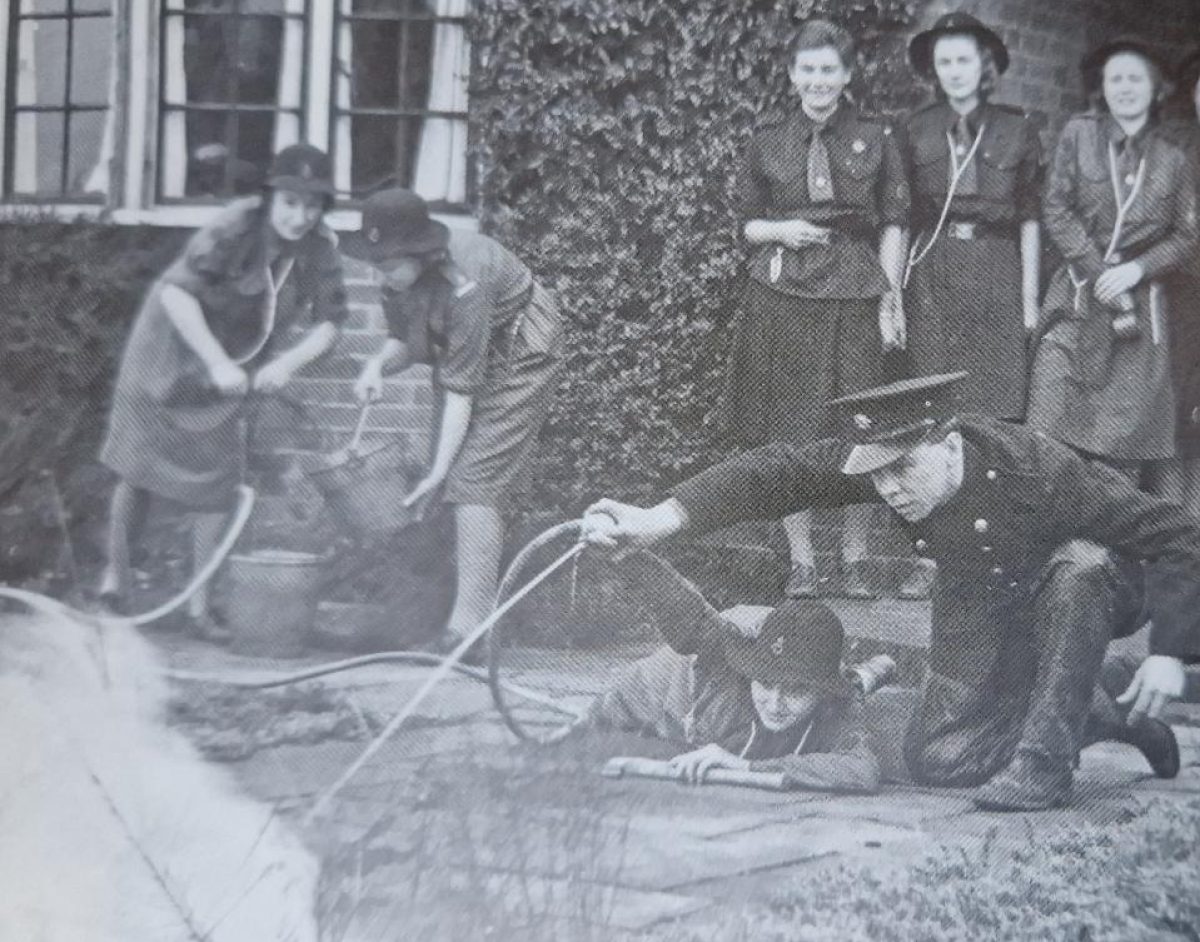
With the declaration first of VE Day in May 1945, and then VJ Day in August 1945, the war was over – but the rationing and the austerity was actually increasing. And Guiding programmes which had been focused so heavily on war for so many years – now had to find a new focus – how could they maintain the interest without the immediate priority of war?
From the autumn of 1944, it appeared likely that the allies would win World War 2, as gradually more parts of western and eastern Europe were being liberated. The first staging post was VE Day in June 1945, and the war ended in August 1945 with VJ day. But – the only thing which ended was the fighting, the other problems on the home front were ongoing. In Britain, rationing continued, and would do so for five more years – indeed initially it became even more strict than it had been during the war with staples such as bread being rationed for the first time. In many cities there were housing shortages due to the number of buildings which had been damaged by bombing, and for those in the south-east especially, schooling had been disrupted – and meeting places for Guiding units remained hard to come by. The focus on make-do-and-mend, and on dig-for-victory was still as relevant, but as the threat from bombing subsided, and ‘doodlebugs’ became fewer as more launch sites were captured, so the focus on first aid and rescue skills could decrease, and more attention be given to DIY and handywoman skills. The programme challenges too – Golden Bar and Golden Hand, Second Class and First Class, Ranger Certificates – also became more of a focus.
The other focus was international, looking towards the sisters abroad, many of whom had suffered far more from the war than had those in the UK. Practically, the focus was on supporting the GIS, as ongoing fundraising was required to pay for the equipment the volunteer teams used, and to cover the volunteers’ living expenses while they were serving. The other international factor was in learning more about the Guiding sisters abroad and what they had experienced, and in some cases opportunities became available to travel abroad.
After wartime restrictions were lifted, camping also returned, with ‘army surplus’ stores being a useful source of new kit, to replace that lost during the war to requisitioning or bombing. With the return of Guiders from the services, more licence-holders were also available to run camps.

International Folk Dance Festival
With peace having come, Guiding sought a way of bringing together the nations of Europe in a friendly event, and the International Scout and Guide Folk Dance Festival was held in London, in July 1947. Dancers came from various European countries, wearing their national costumes, and accompanied by traditional musicians, to perform dances from their countries, and see each other’s cultures.
 Leslie's Guide War History