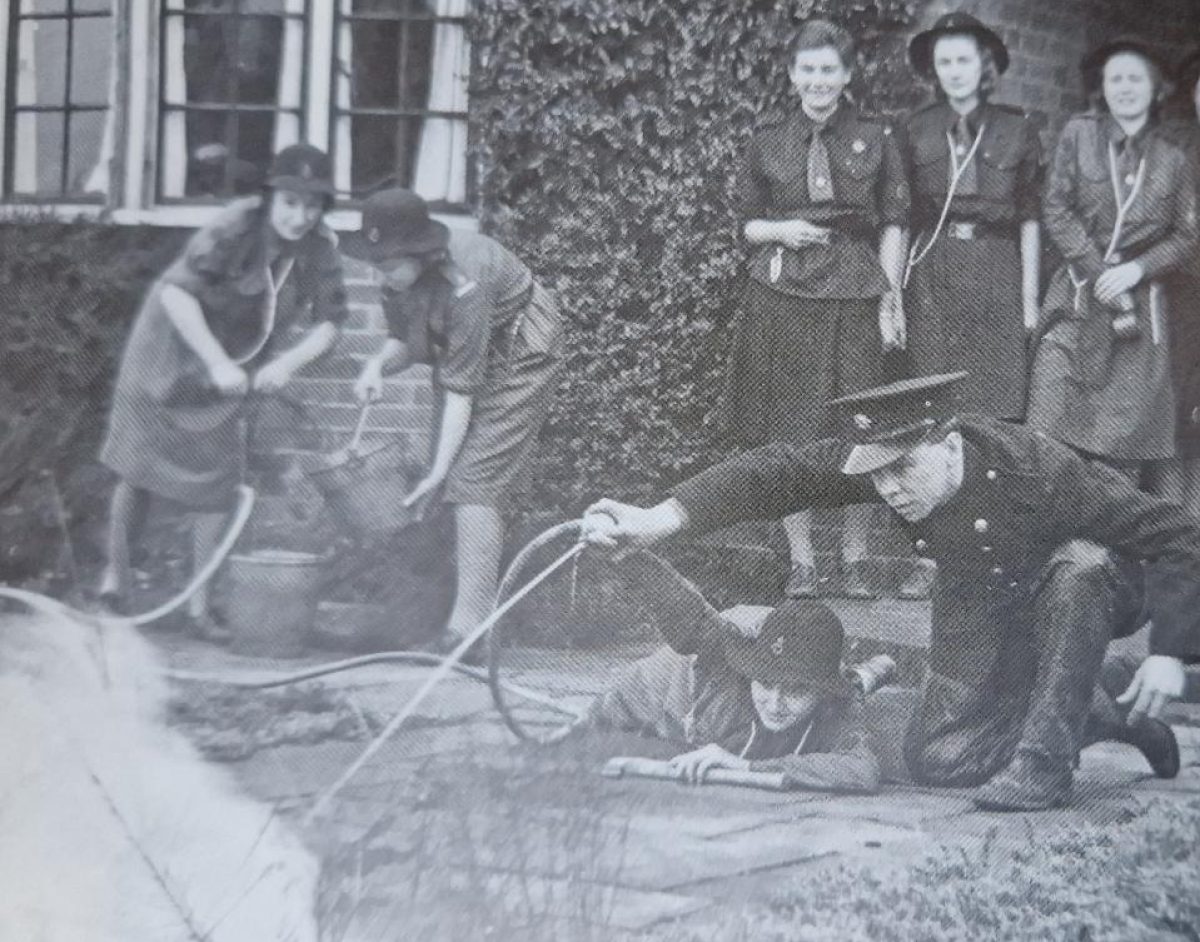

It is easy to think that everything Guides did during the wars, and especially WW2, was non-stop heroic. And there is a real danger that a website of this sort might serve to enhance that false impression. But, though I wouldn’t disagree that there were aspects of it which were heroic, or dogged, or enduring, or brave, it’s important to remember that the history which gets recorded does tend to focus only on the dramatic – the acts of bravery, the acts of endurance, the carrying on against the odds – whereas it tends not to record those who were less successful, nor those who were not given the opportunity to show what they could have done if they had been put in a tight corner.
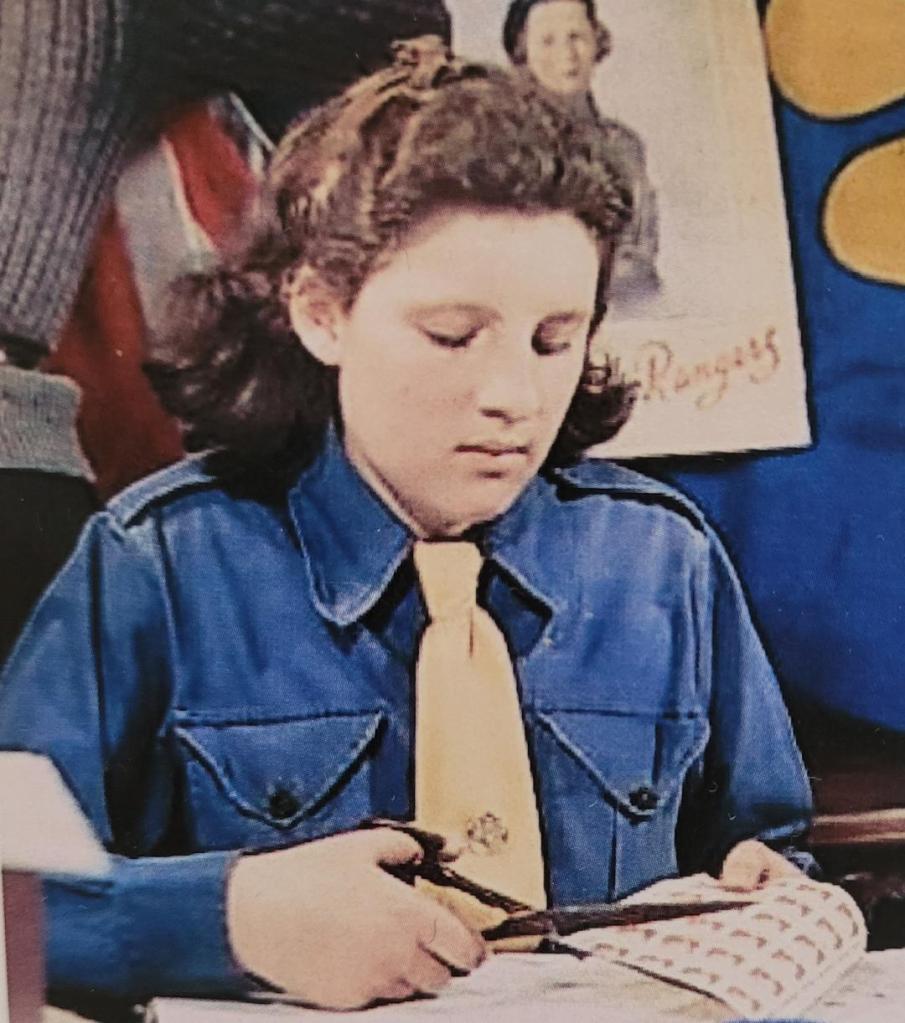
Although many units in heavily-bombed areas of the UK kept going throughout the war in spite of difficulties, sometimes against major odds – equally many others, for obvious reasons, closed, their members scattered and not always able to remain in Guiding. And though units in the cities and in the south east of England were often affected by bombing, those elsewhere in the UK were far less often affected by it, or not directly affected by it at all, the main effect of war on them being factors like shortages. And although many Guides gave a lot of time and made significant contributions to the war effort, it wasn’t every Guide who earned the war service badge, or who was able to put in long shifts at war work, or who raised umpteen pounds for charity, or who grew significant amounts of food for their family in vegetable gardens or allotments or kept livestock for food. Just as nowadays not every Guide is a heart and soul enthusiast who both thinks about and is able to make time to do Guiding activities every day, not just once-a-week.

Equally, whilst we may admire their knowledge or skills, we must remember that they were not a breed apart from modern girls. If we look at the letters page and the articles in “The Guider” in 1938 and early 1939, we read letters from several Leaders publicly and openly airing major doubts that their girls could cope if war did break out – and in that brief lull between war being threatened and it potentially breaking out, Guiders admitted that they were rushing to brush up neglected Golden Hand or Second/First Class skills such as first aid or signalling, concerned at gaps they perceived despite these being the Guiding basics of the day, the core parts of the programme. “The Guider” magazine, in both articles and in fiction stories, urged Guiders to give more responsibility to their PLs, despite any personal doubts over whether those PLs would be capable of stepping up. It’s unlikely that those Guiders who took time to write in, and admit their concerns, were the only ones with such doubts.
So although circumstances would be very different were any modern war to break out, nevertheless there is no reason to doubt that a similar proportion of modern Guides would rise to whatever challenges they might face were an equivalent emergency to arise, as rose to the challenges then. What we can learn from, is the attitude to ‘the enemy’ which they showed. Despite the temptation to express anti-German feeling when experiencing the stresses of clothes and food rationing, the threat of invasion, in some cases being under nightly bombing, in some cases being separated from their friends and families for months or years by evacuation, in some cases seeing home destroyed and family members or neighbours significantly, perhaps permanently injured, or killed – Guides were encouraged, as far as possible, to object to the ideology itself, not to the nations within which that ideology held power – to oppose the Nazis rather than to oppose all Germans. Guides in all other countries, whatever style of government their country currently had, were still sister Guides just as they had been before war broke out. And as soon as it was possible after war ended, in each country, Guiding resumed, in some cases with training and support from UK Guiders, whether they had been war allies or war opponents. Even in countries which had to spend many decades without Guiding due to their political situation, as soon as it was possible for it to return, it did. The Guiding spirit survived – and still does.
INFORMATION SOURCES
The information on this website has come from a number of sources. Some are listed below:
Books/Magazines:
How the Girl Guides Won The War – by Janie Hampton
Brave Girls – The Story of Girl Scouts and Girl Guides in the Underground by Harriet C Philmus
Policy, Organisation and Rules of the Girl Guide Association – 1939, 1943, 1947 editions – Girl Guide Association
Girl Guide Gazette/The Guider magazine – Girl Guide Association
The Guide magazine – Girl Guide Association
The Council Fire magazine – Girl Guide Association
Opening Doorways – by Olave Baden-Powell
The Left Handshake – Boy Scout Association
Information was also drawn from the archives then held at Foxlease, and at Waddow Hall. These have since been transferred to the Girlguiding UK national archives, so are not currently accessible to researchers.
 Leslie's Guide War History