
Pre-WW2 Guiding in the Channel Islands
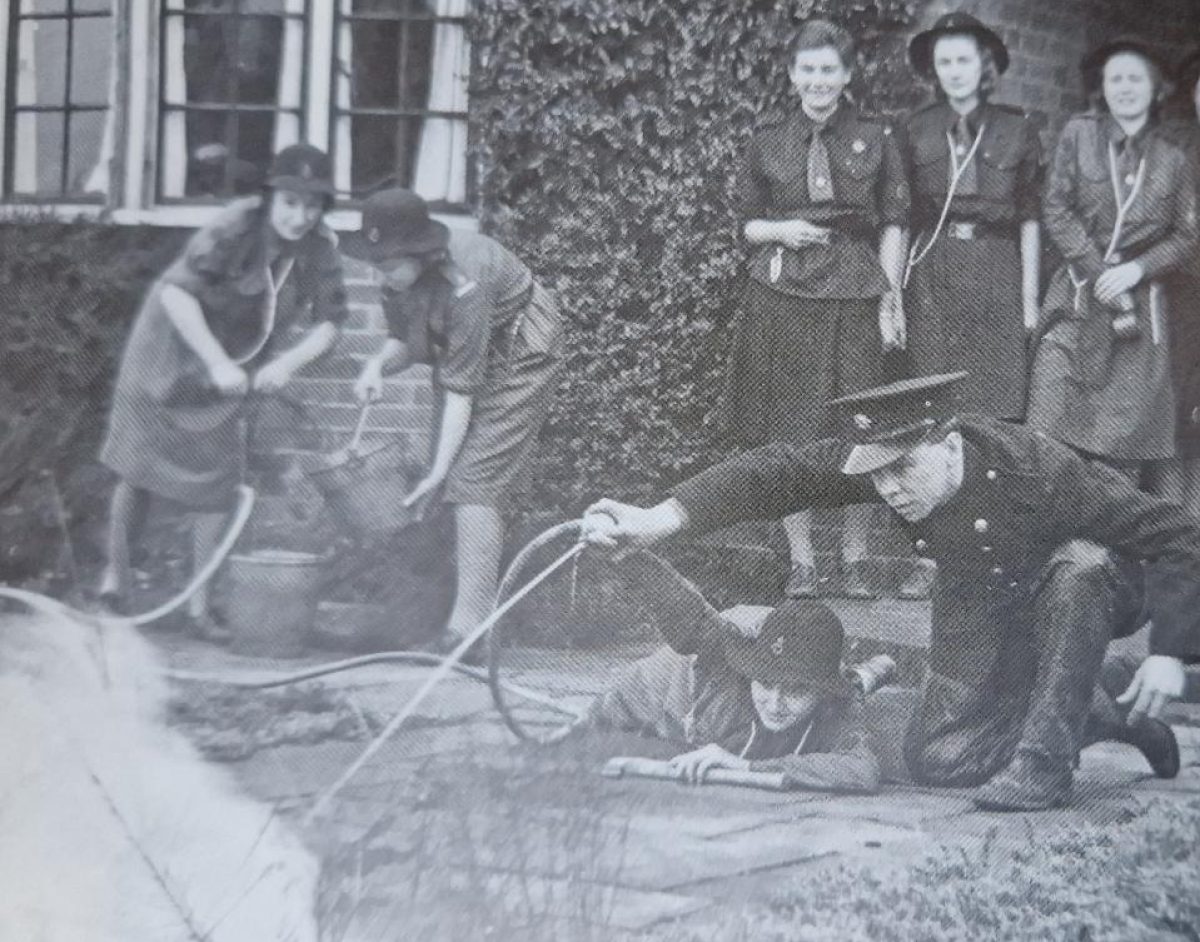
Guiding started in the Channel Islands over 100 years ago, and by 1939 there were Brownies, Guides, Rangers, and especially Sea Rangers on all of the main islands. The landscape on each of the islands in the group gave lots of opportunities for sailing and swimming, for camping, and for nature activity of all sorts.

Evacuation, Invasion and it’s implications
During the first part of World War 2, life carried on much as it had before, just like in the rest of the UK. But, that was about to change. On 15 June 1940, the UK government advised that, in the event of an invasion of the Channel Islands, Britain would not be able to defend them. Because of this, it was advised that if invasion happened, the islands should immediately surrender in order to avoid bloodshed – and all strategic military equipment was withdrawn from the islands, leaving them unprotected.
France surrendered on 22nd June 1940, and Alderney was promptly evacuated, as was half of the 43,000 population of Guernsey – including most of the children. The girls from the Guernsey Girls’ Intermediate School were evacuated to Rochdale in Lancashire – and their Guide Company continued ‘in exile’. On Jersey it was left to individual families to decide what to do, and as most had no family or connections in Britain to go to, they opted to stay. Many imagined that evacuation would be a temporary thing, and in the end, only some 11,000 left Jersey. On 28th June, Jersey was attacked, with the harbour at St Helier bombed and machine-gunned – it is suggested that the farmers’ tomato lorries were mistaken for military vehicles. Those who had changed their minds about evacuation found it was now impossible to leave, with the island cut off from Britain. Guernsey was invaded on 30th June, and within three days, Jersey, Alderney and Sark had all surrendered. British territory was now in German hands.

Early stages of the invasion
For the Germans on the Channel Islands, the thinking was that the invasion of the islands was just a staging post towards the invasion of Britain. After all, the Islands were not just British territory, they were only 80 miles from the British mainland.
At first, relations between the locals and the occupying army were positive. There was a curfew at dusk, and the shops remained open. But within a month of the occupation, food rationing was introduced, farmers had to get permission from the authorities before they could harvest their crops, and then the rations were repeatedly cut. Soon, locals spent most Saturday mornings queueing at food shops, often only to find that stock had run out before they reached the front of the queue.
Meantime, on Guernsey fortifications were being built – over 900 large concrete fortifications above and miles of tunnels below ground, along with many smaller items such as gun fortifications. All of these made it unlikely that the Channel Islands would be relinquished soon – but also meant having 12,000 soldiers, plus over 16,000 forced labourers working on construction – or one worker per 3 residents living on the island. This inevitably meant shortages of supplies for all.

Intensification of rationing
Before long, life was becoming increasingly difficult. As the Germans bought up most of the supplies which local farms could produce, there was little food left for locals. Domestic baking of bread, cake or pastry was forbidden. The time came when all the rabbits and wild birds had been caught and eaten, and the hedgerows stripped of all the edible plants, and only those who had gardens had any access to vegetables. The beaches were out of bounds and the land mines which had been installed prevented fishing, cameras were confiscated, all radio stations except German ones were banned, and all clubs and societies were closed down. In time, the heating of public rooms was forbidden, and electric cookers and fires banned. The coal and wood allowance was cut, leaving only sufficient for three hours a day of cooking or heating. As petrol ran out, people started to claim and use the bicycles which had been left at the port by those who had evacuated – so the authorities confiscated the bicycles. So many Islanders were sentenced to prison, that they had to wait for a postcard to advise that a space in the jail had become available, in order to serve their sentence!
Despite this, Guiding continued ‘underground’, without uniforms. Guides walked to Leaders’ houses, singly or in small groups, and using different routes – and the meeting day and times varied according to season. Guide and Sea Ranger camps, too, happened – staying in sheds or an empty cottage. And when the Guides got word from sources of Robert Baden-Powell’s death and of the memorial fund which had been set up thereafter, they raised funds to send off whenever it might become possible to do so.
Things became worse in the summer of 1942, when a group of Russian and Ukrainian prisoners of war were brought to the islands to build more fortifications. Starving, they were allowed out after dusk every night to scavenge for food – being both hungry and cold, they took what they could from locals’ gardens and allotments. Then in September, all adults under seventy who had been born on mainland Britain were deported to German concentration camps, along with the twenty Jews who lived in Jersey.

Liberation
After D-Day on 6th June 1944, and the liberation of the nearby port of St Malo in August 1944, the Channel Islanders’ hopes raised that their liberation, too, might come soon. But it was far otherwise. Instead, more German forces were shipped in, meaning even less food to go round – especially since the allied invasion of Normandy meant the German supply lines back to their homeland were broken, and the Germans could no longer ship any food in for themselves, far less for the locals. All gas for cooking was cut off, meaning the only option for cooking was the ovens in bakeries and restaurants – and no matches or candles were available for lighting. The people were down to two months’ supply of dried beans, tinned vegetables and fish. Still no relief came – the British avoided sending supplies to the islands for fear they would all be claimed by the German forces, and did not attempt to invade, as the Germans continued to heavily defend Guernsey. Nevertheless, Guides tried to carry on as before, but Boxing Day 1944 saw the death of one of the long-serving Guiders – she was at home alone, when she heard a noise outside. She went outside to find a German soldier stealing her chickens – in his desperation he shot her, and Mildred Wadell died two days later from the wound. Severe winter weather in January saw many residents die of cold and starvation, before finally a Swedish Red Cross ship arrived with food parcels – but not desperately-needed matches, soap or lamp oil. During January each house had been allowed to use one light bulb for one hour per night – but at the end of the month that was withdrawn – there was no more coal, so the power station and the communal kitchens were closed. During the spring food rations were cut and further cut, with only the occasional Red Cross ship preventing total starvation. With the occupying troops in almost as bad a state of malnutrition as the islanders were, some rebellions occurred. Finally, in early May, a rumour spread that the end was in sight, and on 8th May a crowd gathered in Royal Square. A speech by British Prime Minister Winston Churchill was broadcast, and he stated “Our dear Channel Islands are to be freed today . . . ” Within an hour the houses were draped in flags, and the Guide flags were unearthed. The next morning all the Guides put on their uniforms and joined the crowd at the harbour to see the arrival of HMS Beagle, whose officers accepted the German surrender. By nightfall all the German troops were in holding centres. On 12th May landing ships arrived, unloading supplies, and collecting the POWs in return. The Guides had carried out undercover plain clothes ‘Church Parades’ throughout the war, sitting together in their usual pews – but on 13th May they could at last openly take part in church parade for the first time in 5 years – and send off the £10 they had raised to the Baden-Powell Memorial Fund.
 Leslie's Guide War History